Bedding · Sheet Buying Guide
Naturepedic and Coyuchi Sheets: What to Compare Before Choosing
Organic flax sheets can look similar on a product page yet behave differently in the laundry, fit a mattress differently, and feel distinct against the skin. A useful comparison goes beyond a label or a single number: consider fabric weight, finish, washing guidance, pocket depth, set contents, and the sourcing information each brand provides.
Published October 16, 2026
Choosing between Naturepedic sheets and Coyuchi sheets is less like comparing two identical maps than reading two accounts of the same landscape. Both brands offer organic linen bedding made from flax, and both describe linen as breathable and suited to comfort across seasons. But a sheet’s everyday character is shaped by the details behind the broad category: how heavy the cloth is, whether it has been washed for softness, how deep the fitted sheet is, and what the care label asks you to do.
Those details matter in ordinary moments. A fitted corner that stays put can make a bed easier to remake. A wash temperature that suits your household routine may determine whether laundry feels simple or fussy. A more substantial fabric can feel reassuringly weighty, while a lighter hand may be preferable if you dislike bulk. These are not universal measures of quality; they are practical clues to whether a particular set suits your preferences and home.
This guide compares available specifications for Naturepedic Organic Linen Sheets and Coyuchi Organic Relaxed Linen Sheet Sets. Product details can vary by size, color, collection, or time, so check the listing and the care label for the exact set you are considering. The aim is not to declare a winner, but to help you notice what will matter after the first night and the first wash.
Start with the fabric: flax, weight, and feel
Linen begins with flax, but the word alone does not tell you exactly how a finished sheet will feel. Fiber quality, yarn, weave, finishing, and fabric weight all contribute to the result. Linen commonly has a textured surface and a relaxed drape; some people enjoy that natural variation, while others prefer the smoother, more uniform feel often associated with cotton percale or sateen.
The Naturepedic Organic Linen Sheets are specified as 185 grams per square metre (gsm), a useful point of comparison because it gives a numerical indication of fabric mass. The listed fabric is GOTS-certified organic flax linen, with flax grown in France and the sheets made in a GOTS-certified facility in India. Naturepedic describes the cloth as stone-washed and as becoming softer with repeated washing.
Coyuchi’s Organic Relaxed Linen Sheet Set is described as 100% organic flax grown in France and woven into linen in Portugal. The set is presented as relaxed in feel, with a plant-based softener finish described in the specifications. The available details do not state a matching gsm figure, so it would be misleading to infer that it is lighter or heavier than the Naturepedic fabric. If fabric weight is central to your decision, look for a current specification for the exact Coyuchi sheet set, or ask the retailer whether one is available.
Weight can help narrow a choice, but it cannot predict comfort on its own. A fabric’s weave and finish affect how it falls and feels; the room’s temperature, your sleep habits, and the layers on the bed matter too. A useful approach is to treat gsm as one piece of evidence rather than a score. If possible, handle a swatch or feel a comparable linen fabric before deciding.
For a direct look at the listed Naturepedic set, see Naturepedic Organic Linen Sheets. Details for the Coyuchi Organic Relaxed Linen Sheet Set describe its materials, construction, care, and certification.
Prewashing and finishing: softness at the outset
“Prewashed,” “stone-washed,” and “relaxed” are useful descriptions, but they are not interchangeable technical measures. They indicate that a fabric has undergone a finishing process intended to influence its hand or appearance; they do not, by themselves, tell you exactly how soft it will feel, how much it will change with use, or how it compares with another brand’s finish.
Naturepedic describes its sheets as stone-washed and notes that they become softer with every wash. Coyuchi’s set is described as relaxed linen, and the available specifications mention a gentle plant-based softener finish. Those details suggest that both lines are presented as less rigid than untreated cloth, but the precise finishes differ in description. If you want a crisp, structured sheet, neither a marketing phrase nor a photograph can settle the question. Seek a fabric sample or inspect the return policy before purchasing.
Linen’s surface can also change gradually as it is used and laundered. A slightly rumpled appearance is part of the appeal for many households; it is not necessarily a sign that a set has been poorly cared for. Ironing is optional for a relaxed bed, although a warm iron may be used when a smoother finish is preferred. Always follow the care instructions for the particular set rather than applying general linen advice automatically.
Consider how you want the bed to look on a weekday morning. If you value a casually textured surface, a relaxed finish may suit your routine. If you prefer sharp edges and a pressed appearance, budget time for ironing or accept that natural linen may not remain perfectly smooth between washes.
Fitted-sheet depth and mattress fit
A sheet can be beautifully made and still be frustrating if it does not fit the mattress. Both the Naturepedic and Coyuchi specifications list a 15-inch pocket for the fitted sheet. That gives you a helpful starting point, but the number should be compared with the full height of your own bed setup—not only the mattress itself.
Measure the mattress from its top surface to its bottom edge. Include any topper or pad that will remain under the sheet. A deep pillow-top mattress, a foam topper, or a protective layer can add several inches, and a fitted sheet that is only just deep enough may pull free at the corners. Conversely, a much deeper pocket may leave excess fabric on a thinner mattress. Check whether a product’s listed pocket depth refers to the fitted-sheet construction and whether the brand gives a maximum mattress height.
Also look at how the fitted sheet is constructed. Coyuchi’s listed set describes a full-elastic fitted sheet, a feature intended to help it stay in place around the mattress. The Naturepedic details list a 15-inch pocket. If edge security matters most, compare the construction wording on the current product pages and confirm that it applies to your chosen size. Specifications may differ among versions of a collection.
Before ordering, note the mattress dimensions and height, then compare them with the sheet’s size chart. Do not assume that a “queen” or “king” label alone guarantees an exact match across brands or countries. Mattress naming conventions and dimensions can vary by market, and an oversized or unusually deep mattress deserves particular attention.
Care instructions: warm wash or cold gentle cycle?
Laundry guidance is among the most practical differences to check. Naturepedic’s listed care instructions call for machine washing warm, tumble drying on low, using a warm iron if desired, and avoiding bleach. Coyuchi’s Organic Relaxed Linen Sheet Set is listed for a cold wash on a gentle cycle with like colors, followed by low tumble drying. The two recommendations are not identical, so choose according to the instructions supplied with the exact set rather than treating linen as if every item has the same care needs.
Cold, gentle washing may fit households that already separate delicate textiles or prefer cooler laundry cycles. A warm wash may be more convenient for someone whose regular routine is already built around that setting, although the maker’s stated instructions should remain the guide. Neither temperature should be treated as a universal rule for all linen. Finishes, dyes, construction, and brand-specific testing can affect the recommended method.
For either set, several simple habits help reduce avoidable wear: do not overload the machine, use detergent according to its label, and avoid bleach unless the manufacturer explicitly permits it. Overcrowding can limit movement and rinsing, while excessive detergent may leave residue. Remove sheets promptly from the dryer if you want to reduce creasing, and avoid over-drying. Low heat is specified for both sets in the available care details.
Care instructions are not merely a footnote. They help estimate the time and attention a set will require over months of use. If you share laundry facilities, line-dry regularly, or wash bedding on a fixed schedule, choose the care routine you can follow consistently. A sheet that fits your habits is more likely to remain in regular rotation.
Set contents and sizing: what arrives in the package?
Compare the contents before comparing prices. Naturepedic’s listed sheet set includes a flat sheet, a fitted sheet, and two pillowcases. Its pillowcase dimensions are listed as 20 by 32 inches for Standard/Queen and 20 by 40 inches for King. The Coyuchi Organic Relaxed Linen Sheet Set includes a flat sheet, a fitted sheet, and pillowcases sized to the set. The available description does not specify the number and dimensions for every size in the same detail, so check the current size chart before assuming the packages are identical.
That distinction can matter if you use European-size pillows, extra-long pillows, or more than two sleeping pillows. It also matters when replacing only one part of an existing set. Pillowcase size, closure style, and the fit around the pillow insert can influence how neat the bed looks, even when the sheets themselves are the right size.
Review flat-sheet dimensions as well as the fitted-sheet size. A flat sheet that is too narrow may be difficult to tuck in, while a generously sized one may be easier to fold around a thick mattress. If you prefer to sleep without a top sheet, the fitted sheet and pillowcases may be the components you use most—but the full set’s contents still affect its practical value.
When comparing complete sets, write down the contents for each size rather than relying on the collection’s general description. A Twin set may include a different number or size of pillowcases than a Queen or King set. Confirm those details for the precise option you intend to order.
Sourcing and certification: read the full chain
Both sets foreground organic flax, but their listed production details describe different steps and locations. Naturepedic identifies French-grown flax and manufacture in India at a GOTS-certified organic facility. Coyuchi identifies French-grown flax woven into linen in Portugal and describes the collection as GOTS certified. These are specific statements about sourcing and production; they should not be collapsed into a vague claim that the products are made in the same way.
When a certification matters to you, check what the certification applies to and which exact product or production stage is covered. A certificate can provide a framework for evaluating a claim, but the label should be read alongside the item’s current documentation. Look for the certification name, the scope, and the product listing details. Brand-wide language may not necessarily describe every item in every collection.
Origin information can also help you understand the route from raw fiber to finished bedding. Flax cultivation, spinning, weaving, finishing, and sewing may take place in different locations. The available product descriptions do not document every stage for both sets, so avoid drawing conclusions about unlisted steps. If a particular manufacturing detail is important, seek clarification from the brand or retailer.
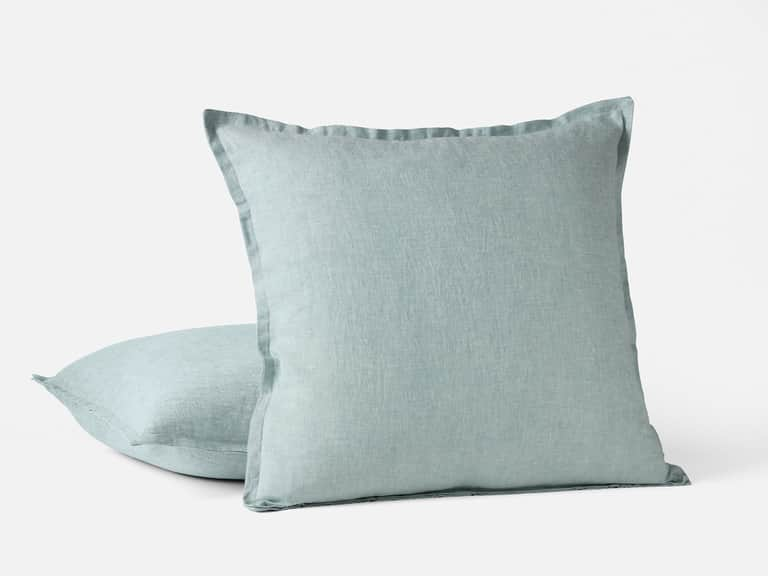
For a wider look at relaxed linen in the home, Coyuchi’s Organic Relaxed Linen Decorative Pillow Cover is another linen item in the site’s catalogue. It is not a sheet set, but its listing also describes organic linen grown in Europe, woven in Portugal, and washed for a relaxed hand. For a sheets comparison, however, the sheet-set specifications remain the relevant basis for decision-making.
Why thread count is not the whole story
Thread count is often treated as a shortcut for quality, but it is not a complete description of linen bedding. A number cannot tell you how a fabric was finished, how it fits your mattress, whether the care routine suits your household, or how the finished surface feels to you. For linen in particular, the fabric’s weight, yarn, weave, and treatment may offer more useful context than a comparison based on thread count alone.
Instead of looking for one winning number, compare the information that shapes actual use: fiber composition, stated weight where available, finishing, fitted-sheet dimensions, set contents, care, and sourcing. Where one brand publishes a detail and another does not, treat that as an information gap—not proof that the unlisted specification is better or worse.
Use your own priorities to interpret the evidence. A sleeper who values a substantial hand may place more weight on the Naturepedic gsm specification. Someone who follows a cold, gentle laundry routine may find Coyuchi’s stated care instructions convenient. A buyer focused on the production route may want to compare each brand’s sourcing information and verify the scope of its certification. The best choice is the one whose documented features align with your needs.
A practical side-by-side checklist
Before you choose, place the product pages side by side and note the following. This turns a broad impression into a set of questions you can answer:
- Fiber and origin: Is the sheet 100% linen, and where is the flax said to be grown?
- Weight: Is gsm stated? If it is listed for only one set, avoid assuming the other is lighter or heavier.
- Finish: Is the fabric described as stone-washed, relaxed, garment-washed, or finished with a softener?
- Fit: Is the fitted-sheet pocket deep enough for the mattress plus any topper?
- Construction: Is the fitted sheet fully elasticized, and are there other features that help secure it?
- Set contents: How many pillowcases are included, and what are their dimensions for the size you want?
- Care: Does the listed wash temperature and drying method work with your normal laundry routine?
- Certification: What certification is stated, and does the current documentation apply to the exact item?
- Appearance: Are you comfortable with linen’s natural texture and the possibility of visible creasing?
Then consider the complete bedding system. A sheet set works alongside a mattress protector, duvet cover, blanket, and pillowcases. The feel of the bed changes with those layers and with the room itself. A breathable sheet cannot, by itself, guarantee that every sleeper will feel cool; comfort depends on the full sleep setup and individual preferences.
Which set may suit your priorities?
Naturepedic may be worth a closer look if you want a stated fabric weight, a stone-washed finish, and warm-wash instructions in the available product details. The listed set specifies 185 gsm fabric, a 15-inch fitted-sheet pocket, and a package containing a flat sheet, fitted sheet, and two pillowcases. Its sourcing description names French-grown flax and a GOTS-certified facility in India.
Coyuchi may merit closer attention if you are looking for a relaxed linen set with a stated cold, gentle wash routine and details about flax grown in France and linen woven in Portugal. The listed construction includes a 15-inch pocket and full elastic on the fitted sheet, and the set is described as GOTS certified. Review the exact size chart for pillowcase contents and dimensions.
These descriptions are starting points, not guarantees of an individual experience. The products may change, and care or sizing details can differ across sizes and updates. Confirm the current information before ordering, especially if you have a deep mattress, a preferred laundry temperature, or a specific certification requirement.
The quiet value of a well-matched sheet
Good bedding is often noticed not as a single dramatic feature but as a sequence of small conveniences: corners that stay in place, a surface that feels familiar, and washing instructions that fit the rhythm of a household. Linen invites that kind of long view. Its natural texture is part of its character, and with regular care, it can become a familiar layer rather than a precious object reserved for special occasions.
For a considered Naturepedic and Coyuchi sheets comparison, resist the temptation to reduce the decision to “organic,” “luxury,” or thread count. Compare the available evidence: weight where stated, finish, pocket depth, wash temperature, set components, and sourcing. Where information is missing, verify it rather than filling in the blanks. The result is a choice grounded less in labels and more in how the sheets are likely to fit your bed, your laundry routine, and your preferences.
In the end, the better set is not necessarily the one with the longer specification list. It is the one whose fabric, fit, care, and included pieces make sense for the way you sleep and live.
Frequently asked questions
Are Naturepedic and Coyuchi sheets both made from organic linen?
Both product listings describe organic flax linen. Naturepedic identifies French-grown flax and a GOTS-certified facility in India; Coyuchi identifies French-grown flax woven into linen in Portugal and describes its set as GOTS certified. Verify current product documentation for the exact item.
Which set is heavier?
The Naturepedic listing gives a fabric weight of 185 gsm. The available Coyuchi sheet-set details do not state a directly comparable gsm figure. Without that specification, it is not possible to make a reliable weight ranking from the published information alone.
Do both fitted sheets have a 15-inch pocket?
The available details list a 15-inch pocket for both sets. Check the current specifications and your mattress dimensions, including any topper, before ordering.
What is the main care difference?
Naturepedic’s listed instructions call for a warm machine wash and low tumble drying. Coyuchi’s listed instructions call for a cold, gentle wash with like colors and low tumble drying. Follow the care label supplied with the exact set you purchase.